
WPC Decking vs Natural Wood: Which Is Better for Outdoor Spaces?
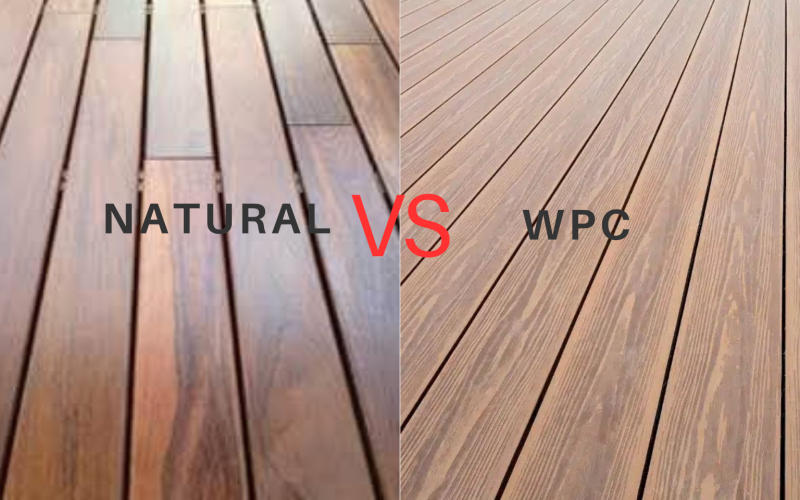
For many years, natural wood was the preferred choice for outdoor decking. However, today, WPC Decking (Wood Plastic Composite) is rapidly becoming the preferred alternative due to its superior performance, lower maintenance requirements, and long lifespan.
Choosing the right decking material can make a significant difference to the appearance, maintenance and long-term performance of an outdoor space. Whether you are designing a villa terrace, garden walkway, balcony, poolside area or commercial landscape, two popular options to consider are WPC decking and natural wood decking.
WPC (Wood Plastic Composite) decking offers a wood-inspired appearance with generally lower routine maintenance, while natural wood provides authentic grain patterns, natural variation and a distinctive architectural character.
At Lux Line Co, we help homeowners, architects, interior designers and developers explore decking and surface solutions for residential and commercial projects in Hyderabad and surrounding areas.
What Is WPC Decking?
WPC decking, or Wood Plastic Composite decking, is manufactured using a combination of wood-based materials, polymers and other additives. Its exact composition and performance depend on the manufacturer and product specification.
WPC decking is available in different colours, profiles and finishes, making it an option for outdoor areas where a wood-like appearance and reduced routine maintenance are priorities.
Before selecting a product, check its intended application, installation requirements, warranty, slip performance and suitability for direct sunlight or areas exposed to water.
What Is Natural Wood Decking?
Natural wood decking uses timber boards to create an outdoor walking or seating surface. It is valued for its genuine wood grain, natural colour variations and timeless appearance.
The performance of natural wood depends on the timber species, treatment, installation quality, drainage and local exposure conditions. Some species are better suited to outdoor applications than others.
Natural wood decking may require periodic cleaning, oiling, sealing or other maintenance recommended for the specific timber and finish.
WPC Decking vs Natural Wood: Key Differences
The right choice depends on your design priorities, maintenance expectations, site conditions and budget.
| Feature | WPC Decking | Natural Wood Decking |
|---|---|---|
| Appearance | Wood-inspired textures and consistent colour options | Authentic wood grain and natural variations |
| Routine maintenance | Generally lower; follow manufacturer guidance | May need periodic oiling, sealing or finishing |
| Moisture performance | Depends on composition, product quality and installation | Depends on timber species, treatment and exposure |
| Sunlight exposure | Colour and surface temperature vary by product | Colour may weather or change over time |
| Termite resistance | Generally resistant to termite damage, depending on composition | Depends on timber species and treatment |
| Splintering | Quality products are generally designed to reduce splintering, but damage is possible | Splinters may develop as the timber ages |
| Repair and replacement | Individual boards may be replaceable if the system allows | Individual boards may be repaired or replaced |
| Sustainability | Depends on recycled content, composition and product lifespan | Depends on timber sourcing, treatment and service life |
| Initial cost | Varies by brand, profile and installation system | Varies by species, grade, finish and installation |
| Best suited to | Projects prioritising lower routine maintenance and consistent finishes | Projects prioritising the character and authenticity of natural timber |
Important: No decking material is maintenance-free. Always review the product’s technical data and installation instructions before making a final selection.
7 Benefits of WPC Decking
1. Lower Routine Maintenance
WPC decking generally does not require the same regular oiling or polishing routine as many natural wood decking systems. Cleaning requirements depend on the product and the conditions in which it is installed.
2. Multiple Colours and Finishes
WPC decking is available in a range of colours, textures and board profiles. This allows designers to coordinate decking with exterior walls, landscaping, outdoor furniture and contemporary architectural finishes.
3. Resistance to Termite Damage
Many WPC products are designed to resist termite damage associated with natural timber. Confirm the composition and warranty of the selected product rather than assuming all composite products perform identically.
4. Suitable Options for Outdoor Projects
Certain WPC decking systems are manufactured for outdoor use and designed to handle exposure to moisture and changing weather conditions. Performance depends on the product specification, installation details, drainage and exposure.
5. Consistent Appearance
Manufactured boards can provide a more uniform finish than natural timber. This may be helpful when a project requires a consistent colour or repeated design across a large terrace, walkway or commercial outdoor area.
6. Reduced Risk of Wood Splinters
WPC decking can reduce the risk of splinters associated with ageing timber. However, boards can still become damaged, worn or slippery. Inspect the surface regularly and select a product with suitable slip-performance information for the intended application.
7. Design Flexibility
WPC decking can be considered for terraces, balconies, garden pathways, outdoor seating areas and selected commercial landscapes, provided the product is approved for the intended use and installed according to its technical requirements.
Benefits of Natural Wood Decking
Natural wood remains an attractive choice for projects where the character of real timber is central to the design.
1. Authentic Natural Grain
Every piece of natural wood has its own grain and tonal variation, giving the finished deck a distinctive appearance.
2. Timeless Architectural Appeal
Natural timber can complement modern villas, landscaped gardens, resorts and outdoor hospitality spaces.
3. Refinishing Possibilities
Depending on the timber species, board thickness and surface condition, natural wood may be suitable for sanding, refinishing or re-oiling as part of its maintenance cycle.
4. Choice of Timber Species
Different timber species offer different colours, grain patterns and performance characteristics. Select timber according to its suitability for outdoor exposure, maintenance requirements and project budget.
Where Can WPC and Natural Wood Decking Be Used?
Both materials may be suitable for selected outdoor applications, subject to product specifications and site conditions.
Villa terraces and balconies: Choose a finish that complements the building and suits the level of exposure.
Garden pathways: Consider drainage, surface grip and regular foot traffic.
Poolside areas: Prioritise appropriate slip performance, water management and surface-temperature considerations.
Resorts, cafés and restaurants: Evaluate durability, cleaning requirements, expected foot traffic and maintenance access.
Landscaped outdoor seating: Coordinate board colour and direction with the landscape design and surrounding surfaces.
Commercial projects: Review installation details, maintenance planning and replacement access before finalising the specification.
Which Decking Is Better for Hyderabad’s Climate?
For projects in Hyderabad and Telangana, the decision should account for strong sunlight, seasonal rain, drainage, dust and the amount of maintenance the owner is prepared to undertake.
WPC decking may be attractive when lower routine maintenance and a consistent manufactured finish are priorities. Natural wood may be preferred when authentic timber character is essential and the owner is prepared to follow the recommended maintenance schedule.
For either material, consider:
Exposure to direct sunlight and surface temperature.
Proper substructure, spacing and ventilation.
Drainage and prevention of standing water.
Product-specific suitability for outdoor use.
Slip performance for the intended location.
Manufacturer installation guidance and warranty terms.
Access for cleaning, inspection and future board replacement.
The best choice should be based on the actual product specification and site conditions, not simply on the material category.
WPC Decking vs Natural Wood: Which Offers Better Value?
There is no single answer for every project. The overall cost depends on the material, board profile, substructure, accessories, installation labour, maintenance and any future repairs or replacement.
When comparing quotations, ask suppliers to specify:
Material cost and board dimensions.
Substructure and fixing system.
Installation charges and accessories.
Surface preparation and drainage requirements.
Maintenance recommendations.
Warranty coverage and exclusions.
Applicable taxes and transportation charges.
Comparing the complete installed system gives a more useful picture than comparing material prices alone.
How to Choose the Right Decking for Your Project
Before selecting WPC or natural wood, consider the following questions:
Is the deck exposed to direct sun, rain or standing water?
Is a natural timber appearance essential to the design?
How much routine maintenance can the owner undertake?
What slip performance is needed for the intended use?
What is the total installed budget?
Are the selected boards and substructure suitable for the site?
What maintenance and warranty conditions does the manufacturer specify?
A product sample and a review of the installation details can help you make a more informed decision.
Explore Decking Solutions with Lux Line Co
Lux Line Co provides flooring and surface solutions for residential and commercial projects in Hyderabad, Secunderabad and surrounding areas.
We can help you explore decking options based on your project’s design, application, finish preferences and installation requirements.
Planning a terrace, balcony, garden pathway or outdoor seating area? Contact Lux Line Co to discuss suitable decking options and request product details for your project.
Phone: +91 7680075590
Email: info@luxlineco.com
Website: https://luxlineco.com/
Contact us to discuss your requirements, review available finishes and plan the next step for your project.
Frequently Asked Questions
Is WPC decking better than natural wood?
WPC decking may be a better fit when lower routine maintenance and a consistent manufactured finish are priorities. Natural wood may be preferable when authentic timber grain and the option of refinishing are more important. The right choice depends on the product and site conditions.
Does WPC decking require maintenance?
Yes. WPC decking needs cleaning and periodic inspection. Follow the manufacturer’s recommendations for cleaning, surface care and repairs.
Can WPC decking be installed in direct sunlight?
Some WPC products are designed for outdoor use, but surface temperature, colour change and weathering vary. Check the manufacturer’s specifications for the intended exposure before selecting a product.
Is WPC decking waterproof?
Do not assume that every WPC decking product is completely waterproof. Moisture performance depends on the board composition, profile, fixing system and installation. Proper drainage remains important.
Is natural wood suitable for outdoor decking?
Some timber species and treatments are suitable for outdoor decking. Selection should account for exposure, durability, maintenance requirements and the manufacturer’s recommendations.
Where can I explore decking options in Hyderabad?
Contact Lux Line Co in Hyderabad to discuss decking requirements for residential and commercial projects, including product selection and installation considerations.